

How-Tos & Guides, Renter-Friendly Living
Peel and Stick Wallpaper in Bathrooms: Will It Survive the Humidity?
Using peel and stick wallpaper in bathrooms is one of the most searched — and most second-guessed — home decor decisions people make. And “peel and stick wallpaper in bathrooms” is one of the top questions we get asked at Chapter Walls. The appeal is obvious: a bold pattern or calming texture that transforms a bland bathroom in a single afternoon, with no paste, no contractor, and no landlord drama. But then the doubt creeps in. Will the steam from a hot shower peel it off the wall? Will the edges curl in a week? Will it turn into a soggy mess behind the toilet?
The short answer is no — peel and stick wallpaper can absolutely survive in a bathroom. But the long answer matters more, because how well it holds up depends entirely on the material you choose, where you place it, and how your bathroom handles moisture. Let’s break down exactly what works, what doesn’t, and how to get it right.
Can Peel and Stick Wallpaper Survive Bathroom Humidity?
Yes, but not all peel and stick wallpaper is created equal. The material is what separates wallpaper that thrives in a bathroom from wallpaper that gives up after two weeks.
There are three common types of peel and stick wallpaper, and they each handle moisture very differently.
Peel and stick polyester textile is the most popular option for residential use. It is made from a heavyweight woven polyester (usually around 340 g/m²) with a matte, fabric-like finish. This material is splash-proof and can be wiped clean with a damp cloth. It handles normal bathroom humidity — the kind you get from daily showers with decent ventilation — without peeling, bubbling, or warping. It is also PVC-free, which matters if you care about air quality in a small, enclosed space like a bathroom.
Peel and stick vinyl has a canvas-like texture and is the most water-resistant option available. It is scratch-proof, splash-resistant, and can handle higher moisture exposure than polyester. If your bathroom has poor ventilation or you expect frequent direct water contact near the wallpaper, vinyl is the more durable choice — though it is less breathable, which means wall prep and adhesion matter even more.
Paper-based peel and stick is the one to avoid in bathrooms entirely. Paper absorbs moisture, weakens the adhesive, and will eventually peel, bubble, or develop mold. If a product does not specify its material clearly, check before you buy.
Where to Place Peel and Stick Wallpaper in Bathrooms
Placement is the single biggest factor in whether your peel and stick wallpaper in bathrooms projects lasts months or years. The rule is simple: keep it away from direct, sustained water contact.
The Best Spots
The wall opposite the shower or tub is the safest and most impactful placement. It gets zero direct splash and minimal steam exposure, especially if you run your exhaust fan during showers. This is where an accent wall makes the most visual impact too — it is the first thing you see when you walk in.
Above a vanity is another excellent spot. The area behind and around a bathroom mirror gets very little water exposure and provides a natural frame for a bold pattern. A patterned wallpaper behind a simple round mirror creates that “designer bathroom” look instantly.
Powder rooms and half-baths are the easiest win of all. These rooms have a toilet and a sink but no shower or tub, which means humidity levels stay low. You can wallpaper every wall in a powder room without worrying about moisture at all. As This Old House notes, powder rooms are the perfect low-risk space to go bold with pattern.
The Spots to Avoid
Inside a shower enclosure is off-limits for any peel and stick wallpaper. No residential wallpaper product is designed for direct, repeated water immersion.
Directly adjacent to an open shower (within arm’s reach of the spray) is risky. If your shower does not have a door or curtain that contains the water well, the wall immediately next to it will take regular splash damage.
Directly above a bathtub without an exhaust fan running is a problem zone. The steam from a bath rises straight up and lingers on the nearest wall, which can weaken adhesive over time.
5 Bathroom Styles You Can Achieve With Peel and Stick Wallpaper
Now for the fun part — what actually looks good on a bathroom wall. Here are five proven styles, each matched to a wallpaper that works.
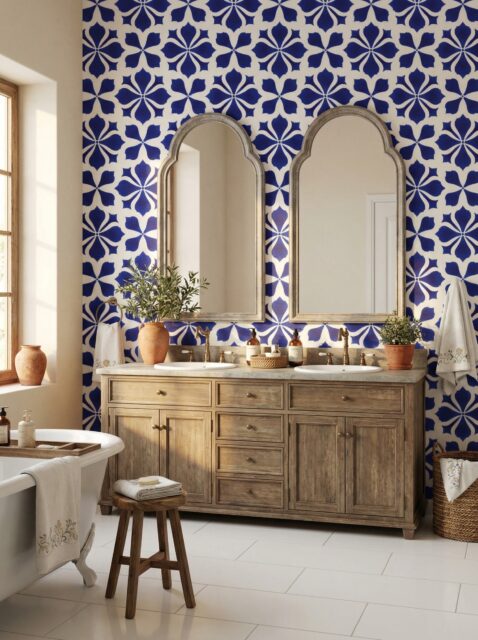
1. Mediterranean Tile Without the Renovation
A tile-pattern wallpaper gives you the look of hand-laid ceramic without the cost, grout, or permanence. This is one of the most popular bathroom wallpaper styles because the pattern already belongs in a wet space — your eye expects to see tile in a bathroom, so the effect is immediately convincing.
Our Blue Portuguese Tile Wallpaper replicates the classic azulejo pattern in blue and white. It is explicitly engineered for moisture-prone areas, splash-proof, and cleanable — a natural fit for the wall behind a vanity or opposite a shower. For a warmer alternative, the Light Beige Moroccan Wallpaper offers a similar geometric structure in soft, neutral tones.
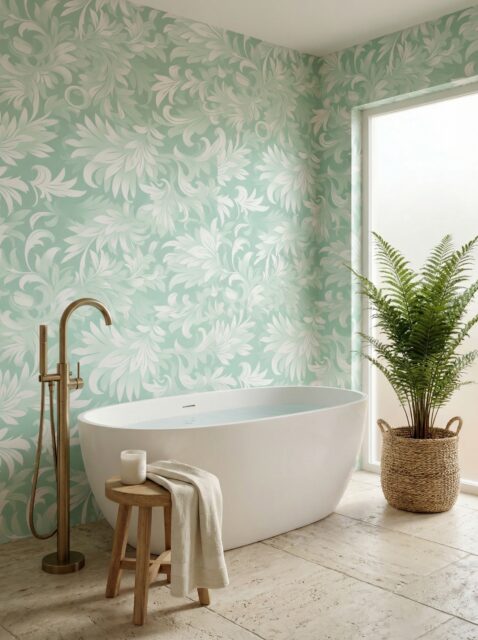
2. Spa-Like Calm With Botanicals
If your goal is a bathroom that feels like a retreat, botanical wallpaper in muted greens or soft whites sets exactly the right mood. The organic shapes of leaves and stems soften the hard surfaces that dominate most bathrooms — the tile, the porcelain, the glass.
The Sage Green Botanical Wallpaper is a standout here. Sage green is the dominant color trend in interior design right now, and it works especially well in bathrooms because it reads as both natural and clean. Pair it with white fixtures, a wooden bath tray, and a few real plants to complete the spa effect.
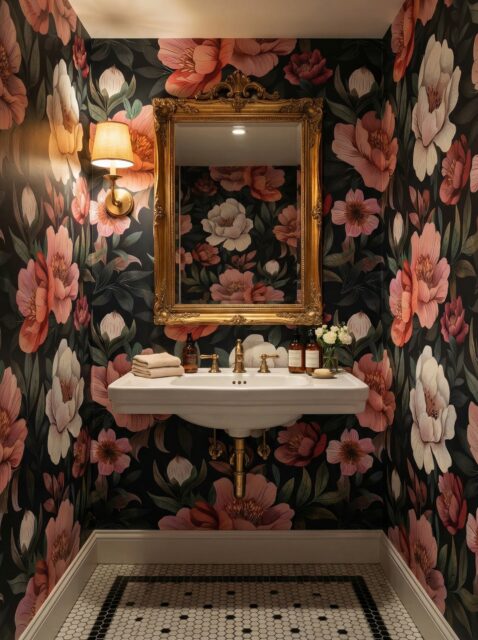
3. Moody Drama in a Powder Room
A powder room is a small space that guests use for a few minutes at a time — which makes it the perfect place to make a bold statement. Dark, dramatic wallpaper in a powder room creates an immersive experience that feels intentional and luxurious rather than overwhelming.
The Dark Floral Wallpaper with its romantic botanical pattern on a deep background is made for this moment. Cover all four walls, add a statement mirror and warm lighting, and you have a powder room that guests will actually talk about. Since powder rooms have minimal humidity, adhesion is never a concern.
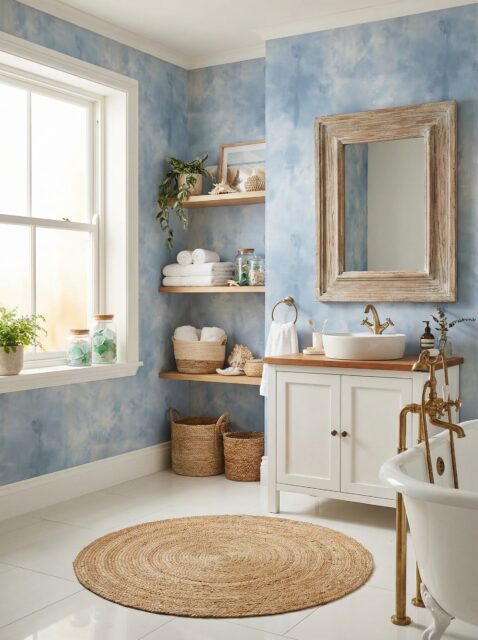
4. Coastal and Breezy
For a light, airy bathroom that feels like a beach house, look for wallpapers in blues, whites, and soft aquas. Tile patterns and watercolor textures both work well for this aesthetic because they evoke water without being literal about it.
The Blue Limewash Wallpaper captures a soft, cloudy watercolor effect that feels coastal without a single seashell in sight. It is explicitly recommended for bathroom use and pairs beautifully with white subway tile, chrome fixtures, and natural fiber accessories like a woven basket or jute rug.
5. Modern Texture With Herringbone
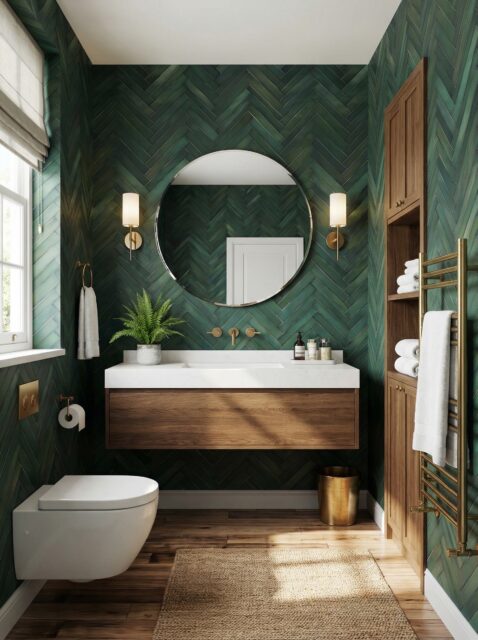
Herringbone patterns have taken over kitchen and bathroom design, but real herringbone tile installation is expensive and permanent. A herringbone wallpaper gives you the same structured, architectural look with none of the commitment.
Our Green Herringbone Tile Wallpaper replicates ceramic tile so convincingly that guests will do a double-take. It is water-resistant, splash-proof, and specifically designed for moisture-prone spaces like bathrooms and kitchen backsplashes.
How to Make Your Peel and Stick Wallpaper in Bathrooms Projects Last
Choosing the right wallpaper and the right wall gets you most of the way there. These additional steps make the difference between wallpaper that lasts a season and wallpaper that lasts for years.
Ventilation Is Everything
Run your bathroom exhaust fan during every shower and for at least 15 to 20 minutes afterward. This is the single most impactful thing you can do for your wallpaper’s longevity — and for your bathroom in general. As This Old House explains, proper ventilation prevents moisture from accumulating on walls and is essential for any bathroom surface, wallpaper or not. If your bathroom does not have an exhaust fan, crack a window during and after showers.
Prep the Wall Properly
Peel and stick wallpaper bonds best to smooth, clean, dry, painted walls. In a bathroom, that means wiping the wall with a mild cleaner first to remove any soap residue, body oil, or mildew. Let it dry completely — at least 24 hours — before applying the wallpaper. If the wall has been freshly painted, wait a full two to four weeks for the paint to cure before applying any adhesive wallpaper.
Seal the Edges If Needed
In a bathroom, the top and bottom edges of your wallpaper are the most vulnerable points. If your wallpaper is near the vanity area where it might encounter occasional splashes, you can apply a thin line of clear caulk along the bottom edge to create a water-tight seal. This is optional for most placements but adds an extra layer of protection in busier bathrooms.
Choose the Right Adhesive Strength
Not all walls are equal. Glossy or semi-gloss paint — which is common in bathrooms — can reduce adhesive grip. If your bathroom walls have a sheen to them, lightly sand the surface with fine-grit sandpaper and wipe it clean before applying. This gives the adhesive more texture to bond to.
What About Long-Term Durability?
People want to know: will peel and stick wallpaper in bathrooms still look good after six months, a year, two years in a bathroom? The honest answer is that it depends on conditions. According to real homeowner experiences compiled by Apartment Therapy, peel and stick wallpaper in well-ventilated bathrooms can last years without issues. The failures almost always trace back to one of three things: the wrong material (paper-based), the wrong surface (textured or glossy walls), or no ventilation.
With a quality polyester or vinyl peel and stick wallpaper, proper bathroom wall prep, and an exhaust fan that actually runs — you are set.
Ready to Wallpaper Your Bathroom?
Now that you know peel and stick wallpaper in bathrooms installations can absolutely work — the fastest path to a transformation is choosing a design that suits your style and your space. Browse our full collection of bathroom-friendly tile and pattern wallpapers, or start with our most popular bathroom picks: the Blue Portuguese Tile, the Blue Limewash, or the Green Herringbone Tile.
New to peel and stick wallpaper? Our guide on how to install peel and stick wallpaper like a pro covers everything from measuring to smoothing, and our post on how to safely remove peel and stick wallpaper will put your mind at ease about the “what if I change my mind” question.